


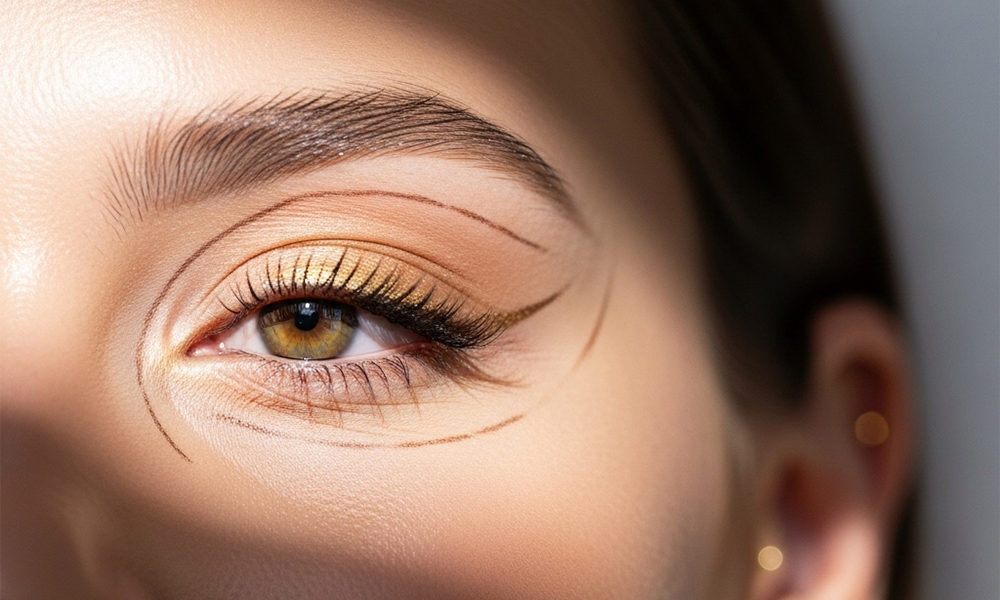
Eyelid Surgery
What Is Eyelid Surgery?
Eyelid surgery (blepharoplasty) rejuvenates the area around the eyes by removing or repositioning excess skin, fat, and muscle from the upper and/or lower eyelids. It can correct a tired, heavy, or aged appearance, and when needed, restore proper eyelid position for improved vision — creating a more alert, refreshed look that stays in harmony with the rest of the face.
Symptoms and Concerns Eyelid Surgery Can Address
Eyelid surgery may be suitable if you experience:
- Excess, drooping skin on the upper eyelids
- Puffy or baggy under-eye appearance
- Fine wrinkles or crepey skin around the eyes
- Under-eye hollowing or dark circles caused by fat displacement
- A tired, aged, or heavy-lidded appearance
- Upper eyelid skin that interferes with vision
- A drooping upper eyelid (ptosis) that lowers the eye's natural position
Types of Eyelid Surgery
Dr. Esen selects the appropriate technique based on which area of the eyelid needs correction:
Upper Blepharoplasty
Removes excess skin and, when needed, a small amount of fat from the upper eyelid. This lifts a heavy or hooded eyelid, opens up the eye, and can even improve vision when drooping skin has begun to obstruct the visual field.
Lower Blepharoplasty
Addresses puffiness, under-eye bags, and hollowing in the lower eyelid by repositioning or removing excess fat and tightening loose skin. This smooths the transition between the lower eyelid and cheek for a more rested, youthful appearance. Two approaches are commonly used: the transconjunctival approach, made through an incision inside the eyelid with no visible external scar (ideal for fat repositioning alone), and the subciliary approach, made just below the lash line when skin tightening is also required.
Ptosis Repair
Corrects a drooping upper eyelid caused by a weakened or stretched levator muscle, rather than excess skin alone. The muscle is tightened and reattached to restore a natural, symmetrical eyelid height and improve the field of vision.
Who Is a Good Candidate for Eyelid Surgery?
You may be a good candidate if you:
- Have excess or sagging skin on the upper or lower eyelids
- Experience puffiness or hollowing around the eyes
- Are in good general physical health
- Have realistic expectations about achievable results
- Do not have underlying eye conditions that would increase surgical risk
During your consultation, Dr. Esen evaluates your eyelid position, skin quality, and fat distribution, along with a basic vision assessment where relevant, to determine the most suitable approach.
How Eyelid Surgery Is Performed
Eyelid surgery is typically performed under local anesthesia with sedation or general anesthesia, and takes 1–2 hours depending on the areas treated.
- 1. Incisions are placed along the natural crease of the upper eyelid, or just below the lash line or inside the lower eyelid
- 2. Excess skin, muscle, and/or fat are removed or repositioned as needed
- 3. For ptosis repair, the levator muscle is tightened and reattached to its proper position
- 4. Remaining tissue is redraped for a smooth, natural contour
- 5. Incisions are closed with fine sutures, hidden within natural eyelid creases
Recovery Timeline
Days 1–3 Swelling, bruising, and mild discomfort around the eyes are expected. Cold compresses and head elevation help reduce swelling.
Days 4–7 Sutures, if not dissolvable, are typically removed. Bruising begins to fade noticeably.
Weeks 1–2 Most visible bruising resolves, and many patients feel comfortable returning to work and light social activities.
Weeks 3–4 Remaining subtle swelling continues to subside, and scars begin to soften and fade.
Months 2–3 Final results settle in, with a smoother, more refreshed appearance around the eyes.
Expected Results
A successful eyelid surgery delivers:
- A more open, alert, and youthful eye appearance
- Smoother upper eyelids without excess hooding
- Reduced under-eye puffiness and hollowing
- Well-concealed scars within natural eyelid creases
- Improved peripheral vision, when drooping skin was previously an obstruction
Frequently Asked Questions (FAQs)
Will I have visible scars?
Incisions are placed within the natural eyelid crease or lash line, making resulting scars very difficult to notice once healed.
Is eyelid surgery painful?
Most patients report mild discomfort, tightness, and dry or irritated eyes rather than significant pain, well managed with prescribed care.
How long does swelling and bruising last?
Most visible swelling and bruising resolve within 1–2 weeks, though subtle refinement continues for a couple of months.
Will eyelid surgery affect my vision?
The procedure does not damage vision. In cases where drooping skin was obstructing sight, many patients notice an improvement in their visual field.
Can eyelid surgery be combined with other procedures?
Yes. It is frequently combined with brow lift, facelift, or facial fat grafting for a more comprehensive facial rejuvenation.